Rediscovering Clay: The Quiet Beauty of Sheree Timm’s Ruby Ceramics
A look at the calm, soulful work of Sheree Timm of Ruby Ceramics — handmade pieces shaped with intention, personality, and a deep love for earth and water.


The appeal of clay as a creative medium?
What first called to me was its simplicity. It’s just earth and water. In a time when my heart was broken, clay was the one thing that demanded I be completely present. It wouldn’t let me dwell in the past or worry about the future; I had to be right there, with my hands in the mud, focusing on the gentle pressure needed to shape it. It became a form of meditation, my quiet therapy. The appeal isn’t about creating something perfect; it’s about the quiet, healing act of creation itself. It’s a humble practice that continually teaches me about patience and letting go.
How does the tactile nature of clay influences creativity?
It reminds me that my hands are meant to feel, not just to do. My creative direction is led by this need for connection. I don’t just want to make things that are nice to look at; I want to make things that feel like a comfort to hold. When someone cradles a mug I’ve made, I want the curve to fit naturally in their palm, the surface to feel soothing under their thumb. The touch tells a story of care and that’s the story I want my work to tell; one of quiet and tangible comfort.
When can pottery become more than a hobby?
It was a very gentle realisation. I was making pieces as a way to heal and I started giving them to friends. I saw how a simple, handmade piece could make someone feel seen and cared for. Then, people I didn’t know began to connect with the work, sharing that having one of my pieces in their home brought a moment of calm to their day. That’s when I understood that this wasn’t just about my own healing anymore. It was about sharing a little bit of that peace with others. It was a deeply humbling shift.
How does graphic design influence ceramics?
My design background gave me an eye for balance and simplicity, but clay taught me the beauty of softness. Where I used to seek perfect lines, I now look for a gentle curve. Where I once worked with exact colours, I now love the way a glaze moves and changes with the fire. My design sense helps me create clean, quiet forms but the clay always has the final say, softening my lines and adding its own unique character. It’s a beautiful partnership between intention and humility.
What’s the story behind the name “Ruby Ceramics”?
“Ruby Ceramics” This name is my manifestation. It is a touchstone that holds a profound and layered meaning. It honours my beloved Rottweiler, Ruby, a cherished gift from my husband and my steadfast companion, whose tragic loss left me heartbroken. Working with clay became my path through that grief, a process of healing shaped by my hands. Drawing from the biblical symbolism of a ruby as a stone of value, wisdom and steadfast love, the name sanctifies the precious and one-of-a-kind bond we shared. Now, each piece I create is shaped with a heart that learned to heal, and I hope it carries a gentle whisper of that same steadfast comfort into the homes and lives of others.
Business
What does a “small-batch ceramicist” mean in a world driven by mass production?
To me, it means honouring the process. It’s not about being against mass production, but about offering something different a connection. Every piece I make is touched from start to finish by my hands. There’s a life and a history in that. When you choose a piece from me, you’re not just getting a bowl; you’re getting something that was made slowly, with care, by someone who truly loves what they do. In a fast paced world, it’s my small offering of slowness and intention.
You say that you love the imperfection of clay. How do you find joy in imperfection?
I strive for sincerity, not perfection. The little variations; a thumbprint, a slight warp, a glaze that pooled in a unique way, these are the marks of a lived-in, human process. They remind us that something beautiful doesn’t have to be flawless to be worthy. Finding joy in imperfection is about embracing the gentle humanness in everything. It’s a practice in self-compassion that extends to the work itself.
How do you balance being the creator and the manager of your business?
I see it as a rhythm, like breathing. There is a time for the in-breath the quiet, meditative time in the studio with the clay. Then there is a time for the out-breath the administrative tasks that allow me to share the work. It’s not always balanced, but I try to listen to the rhythm. When the business side becomes too loud, I know it’s time to return to the clay, to the source of it all and simply make. That always brings me back to centre.
How to turn ART into a business?
The hardest lesson was learning that it’s okay to ask for a fair price for my time and heart. I had to understand that the value isn’t just in the material, but in the hours of learning, the healing journey, and the care poured into each piece. Another lesson was that a “no” or a piece that doesn’t sell isn’t a failure; it’s just part of the path. This work has taught me to be both an artist and a gentle guardian of my own energy and worth.
The nature of clay is inherently sustainable. Does it support sustainability?
My hope is that my work encourages people to slow down. By using a mug that was made slowly, you might be encouraged to sip your tea a little more mindfully. By owning a bowl that you love, you’re less likely to use a disposable one. It’s not about grand gestures, but about these small, daily choices to surround ourselves with fewer, more meaningful things that are built to be used and loved for a long time. It’s a quiet kind of sustainability, one rooted in appreciation for the little things in life.
Creative
Describe your creative process from initial concept to a finished product.
It always begins with a feeling, rather than a precise plan. It might be the soft grey of the morning fog or the feeling of smooth, worn stone. I’ll sit with that feeling and then go to the clay, letting my hands explore the shape that emerges. My hands is where the real conversation happens; the clay responds to my pressure and tells me what it wants to be. Glazing is an act of a lot of trust and opening the kiln is always a moment of a humble surprise. The entire process is a lesson in listening, not just forcing an idea. The final piece is a record of that quiet conversation.
What’s your philosophy around aesthetics vs functionality in your ceramics?
I believe they are one and the same. If a vase can’t hold flowers well or a mug feels awkward to drink from, then its beauty feels empty to me. The true beauty of a functional object is revealed in its use. Does it feel good? Does it make the simple act of drinking your coffee a little more peaceful? For me, that is the highest form of aesthetics – a beauty that is felt, not just seen.
How do you balance “doing what sells” vs “doing what you love”?
I am so grateful that people respond to the pieces I feel most deeply connected to making. That connection is a gift. My guide is always to make what feels true and healing for me to create. I trust that if a piece comes from an honest place, it will find its way to the person who needs it. This approach keeps the work pure for me. It ensures that every item I send out into the world is filled with genuine care, not just a desire to sell.
How does living and working in Mossel Bay influence your work and business?
Mossel Bay holds a quiet, rugged peace that has been essential to my healing. The ever-changing ocean, the resilient fynbos, the wide skies; this environment teaches me about gentle strength and natural beauty. My colour palette is drawn directly from the landscape here: the soft blues, the earthy browns, the muted greens. This place reminds me daily to be patient, to be grounded and to find beauty in the raw and unrefined. It infuses every piece with a sense of this quiet coastal calm.
Brand & Future
How does storytelling tell the story behind Ruby Ceramics?
The story is the soul of it. For me, the story isn’t a marketing tool; it’s the reason this all exists. It’s the story of healing, of finding light after loss and of the quiet comfort of working with your hands. When someone connects with my work, I hope they connect with that feeling of gentle resilience. The visual branding is just the quiet container for that much deeper heartfelt narrative.
What are the pleasures and pains of building your own ceramics brand?
The greatest pleasure is the incredible sense of community. The encouragement from fellow South African artists and the kind words from customers who find a moment of peace in my work is what fuels me. The pains are the very real challenges, like load-shedding, which can disrupt the fragile process of firing clay. But these challenges have also taught me profound resilience and creativity. They remind me that beauty and difficulty often grow from the same soil.
How does your website and social media support the business side of Ruby Ceramics?
They are my bridge. My website is a quiet, still place where the work can speak for itself. Social media is like leaving the door to my studio open. It’s where I can share the real, humble process, the messy hands, the quiet moments at the wheel, the joy of unstacking a kiln. It allows me to share not just the finished product but the healing journey of making it and to connect with a community that values that authenticity.
If you look back to when you first started, what would you tell your “beginner self” before building a creative business like this?
I would tell her to breathe. I would tell her that the fear and the doubt are part of the process and that her soft heart is not a liability but her greatest asset. I would encourage her to trust the slow, quiet work of her hands and to believe that the love she puts into the clay is a real, tangible energy that people will feel. Most of all, I would tell her that she is already enough, just as she is.
I see Ruby Ceramics is growing beautifully. How do you see it growing in future?
My hope for the future is to go deeper, not necessarily bigger. I dream of a small, welcoming studio space where I cannot only work, but also host others who are looking for a little peace. I’d love to hold simple workshops where people can experience the therapeutic feel of clay for themselves. I see it growing as a space of healing and connection, always rooted in the humble, honest work of making things by hand.
Working with clay is such a visceral process, what do you hope people feel when they hold one of your pieces?
My deepest hope is that they feel a moment of peace. I hope the weight of the cup in their hand brings them back to the present moment. I hope they can feel the intention of care that went into making it. More than anything, I hope they feel a sense of being grounded and comforted; a gentle reminder that they, too, are resilient and worthy of quiet moments of grace. I hope my pieces become quiet companions in their daily lives, holding space for them to just be.
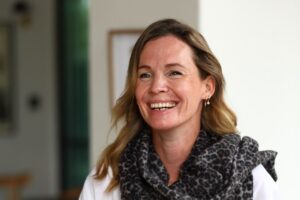
Images courtesy of Sheree Timm | www.rubyceramics.co.za